

Recently, I spoke with a consultant who was worried that a project might stall. His client hadn’t completed the work they had agreed to do before their next meeting.
The assignment was to take general job responsibilities and formulate them as specific results for that company. The consultant used a clear structure: an action, a quantity, a frequency, a deadline and one accountable person.
When you use a structure like that every day, the steps can feel obvious. But knowing your business and turning that knowledge into clear responsibilities are different tasks. A client may follow your reasoning during a meeting and still struggle to do it alone.
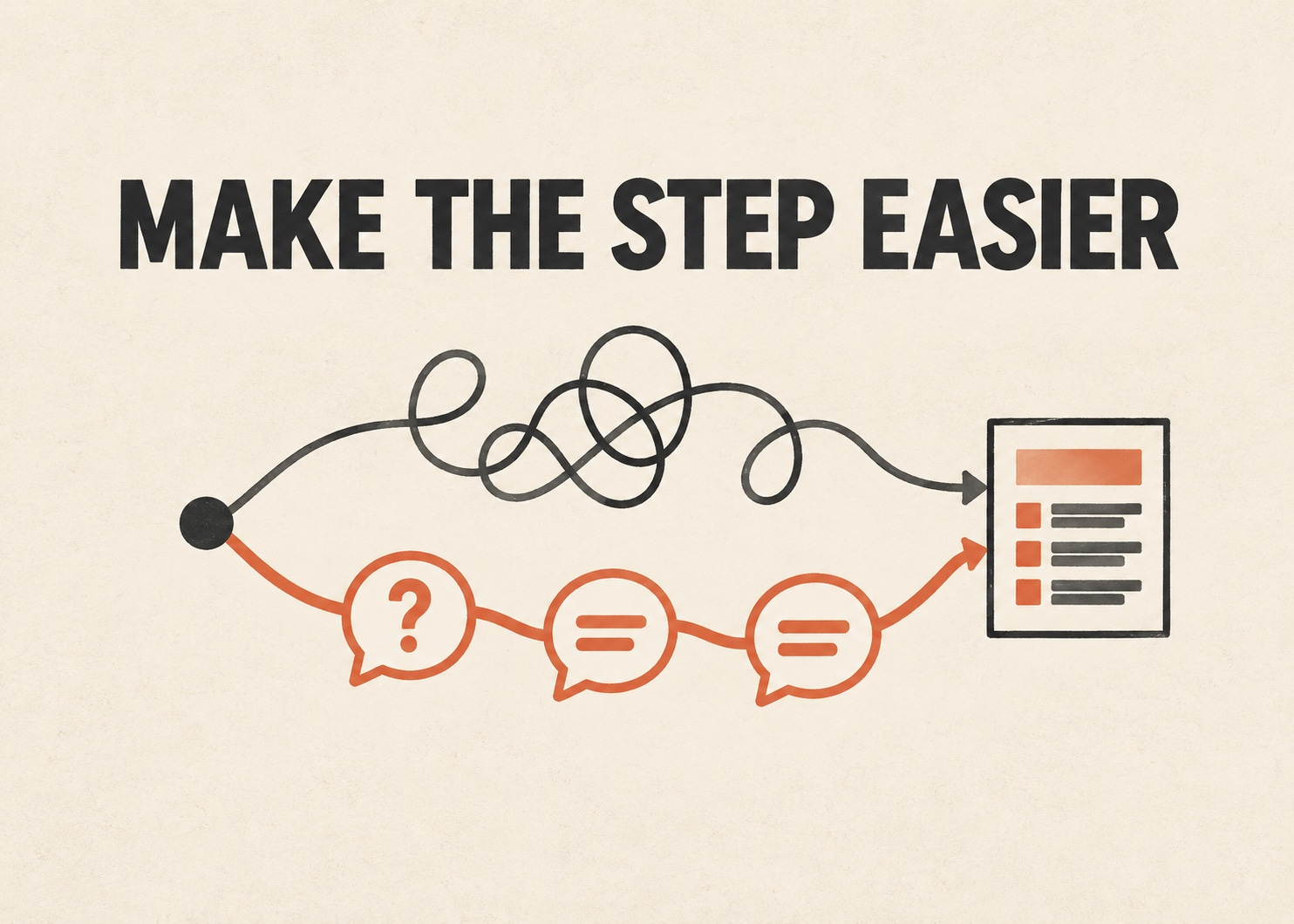
My suggestion was to create an interview-style prompt that would guide the client through that preparation. It would ask about their company, the work each role handles and what needs to be achieved. Through understandable questions and follow-ups, it would gather the details and help formulate responsibilities that fit their business.
It could help them arrive at the next meeting with proposed results, priorities and open questions, ready to work through with the consultant.
The same difficulty can appear when you ask someone on your team to turn familiar work into a clear plan or commitment. If a step in your process costs them time and effort, helping them through it is part of delivering the result.
SI gives us more ways to create this kind of support. The skill I value most is noticing where someone is struggling, understanding what is getting in their way, and building something they can use.
That is what I want the work to leave behind: a client who can run it, judge it, and pass it on.
Run it
Here, “run it” means the client can complete the preparation with the guide, without the consultant walking them through every answer.
The prompt would need to understand enough about the company to make that preparation useful.
Which role are we working on? What does that person actually do? What needs to be achieved? Where is the current responsibility unclear?
Those questions give the guide something real to work with. It can then help the client make each responsibility specific.
For an illustrative example, take “monitor sales.” A conversation could develop like this:
“What do you need the sales information for?”
“At our Monday meeting, we decide which products need more attention.”
“What information helps you make that decision?”
“The previous week’s sales by product, compared with our weekly targets.”
“How often should that be prepared, and when do you need it?”
“One report every week, ready by 9 a.m. on Monday for our 10 a.m. meeting.”
“Who is responsible for preparing and sharing it?”
“The sales team.”
“Which one person is responsible for making sure it is ready?”
“The sales manager.”
From those answers, the guide could propose:
Prepare and share one report comparing the previous week’s sales by product with the company’s weekly targets, every Monday by 9 a.m.
Accountable person: the sales manager.
The details fit the company described in the example: its meeting, its decisions, its targets and the person responsible. The client has supplied those details through a conversation. The prompt has helped put them together.
Where something is missing, the guide asks. If the client cannot yet identify an accountable person, that stays visible as a decision to discuss with the consultant.
The guide could then ask which responsibilities are causing the most difficulty and help the client choose what to discuss first. With that preparation in front of them, the consultant and client can use the meeting to examine whether the commitments fit the business, resolve uncertainties and refine the work.
To test the support, work through one responsibility together. Then let the client prepare another using the guide. Notice where they get stuck and improve the questions or explanation.
This follows a useful training principle: demonstrate the work, let the learner attempt it, and reduce coaching as they become capable. That progression is part of Training Within Industry’s Job Instruction method.
Judge it
The client should be able to look at a proposed responsibility and recognise whether it fits their business. The guide can help by taking them through three questions.
Does this match what I said?
In the sales example, the client asked for the previous week’s sales by product, compared with weekly targets. If the guide produces a statement about a monthly sales total, the client has something specific to correct.
They can compare the proposed statement with their answers and explain what needs changing. Their knowledge of the business gives them a useful starting point for that judgment.
Does it include what we need?
The client can check for the agreed elements: the action, quantity, frequency, deadline and one accountable person. They should also understand what the work is for.
In our example, the report needs to help the Monday meeting decide which products need attention. That purpose explains why the breakdown by product matters and why the report must be ready before the meeting.
The guide could ask the client to read the statement back in their own words. What will be delivered, by whom, and when? How will it be used? Their explanation can reveal a missing detail or a misunderstanding worth resolving.
What needs clarifying or deciding?
If weekly targets already exist, the client needs to find or confirm them. If they have not been agreed, someone needs to decide what they should be. The same distinction applies to ownership: confirming who holds a responsibility is different from assigning it.
The guide can help separate those questions and identify who can answer them. The client can resolve the details they have access to and bring the remaining decisions to the meeting.
Roland Frasier gives a related example of when to involve someone else with a person who owns renewals but must escalate requests for prices below a margin floor.
For the guided preparation, that means helping the client distinguish between a detail they can confirm, a correction they can make and a question that needs discussion with the consultant or someone in the business.
A simple way to check understanding is to use the client’s own preparation. Ask them to compare a proposed responsibility with their answers: what can they confirm, what would they correct, and what still needs resolving? Their explanation shows where the guidance has helped and where they need more support.
The aim is for the client to arrive able to explain their preparation, question it and improve it with the consultant.
Pass it on
Useful guidance should also be usable by someone who was not part of the original conversation.
In our example, the sales manager could share the guide with an operations colleague. That person would work through their own responsibilities, supplying details about what their role needs to achieve, the timing that makes sense and the people involved.
Some company context could carry over. The questions would still need to draw out what matters for this person’s work. The sales report, its deadline and its targets belong to the sales example.
What carries over is the way of working: start with a familiar description, clarify the details, formulate a company-specific result and identify anything that still needs discussion.
For that to be practical, the next person needs access to the guide and a clear place to start. Include a short recorded walkthrough and a completed example they can return to as they work. Those materials can explain what they are preparing and how to check it, without the owner repeating the explanation each time.
Dan Martell describes a useful transfer method: record yourself doing and explaining a task, then have the person receiving it write the instructions. Their account gives you a way to see what they understood and where the explanation needs work.
Here, the next person’s own preparation can show where the guidance needs work. Ask them to prepare one of their responsibilities using the shared guidance. Can they explain what is ready for the consultant’s review and what still needs clarification? Notice where they needed help, then use those questions to improve the guide. Their attempt gives you another view of whether someone can use the support with their own inputs.
When the same guidance can help another person make progress on their own work, its usefulness can extend beyond the original engagement. It may become a reusable part of your service. If it gives people useful preparation as a standalone resource, it could also become a free lead magnet or a paid product. The format follows from the problem it helps people solve.
The capability worth passing on is the ability to take another real responsibility, work through it with the guide and arrive with something specific to review. Each person brings their knowledge of the work; the guidance helps them put it to use.
Start with one point of friction
This week, choose one ordinary, low-risk task that regularly needs your involvement. Ask the person doing it to show you where they get stuck.
Find out what is missing. Do they need help turning what they know into the required output? Is an instruction unclear? Are they waiting for a decision or access to information?
Let that answer shape the support you provide. An interview-style prompt might help them organise their thinking. A worked example might make the expected result clear. A decision about who can approve the work might be what allows it to move.
Then let them try another case with that support available. Can they get past the step that previously held them up? Notice where they still need help and whether they understand the result. Their questions give you something useful to improve.
Keep a short note of what helped and what remains unresolved. Use it to refine the guidance so the next person has a clearer starting point.
The difficulty the client has with your process is itself something you can help solve.